


TALKING ABOUT SEACOCKS
By Christian Mancebo, SA
One of the most important single parts on the boats are the seacocks and thru-hulls. Among the crucial responsibilities of every surveyor is to assess the quality and condition of those two components.
The ABYC has established standards (H27) for marine seacocks. One of them is that the seacock withstands a 500-pound load applied to it for a period of 30 seconds to the inboard end of the assembly. This also requires that the handle indicates whether it is open or closed. Remember that ABYC outlawed gate valves many decades ago.
Unfortunately, we are still seeing this type of fittings. This is inadmissible.
Another challenge we usually find in boats is confusion of the owners and captains replacing the seacocks whilst thinking they are getting DZR or marine quality bronze, but instead they are getting brass due to the lack of labeling from the manufacturers. Using brass fittings can lead to catastrophic results for boats. Brass is an alloy consisting of zinc and cooper. In saltwater, brass is prone to produce a form of corrosion known as dezincification resulting in what is often referred to as metal becoming “carroty” due to its color.
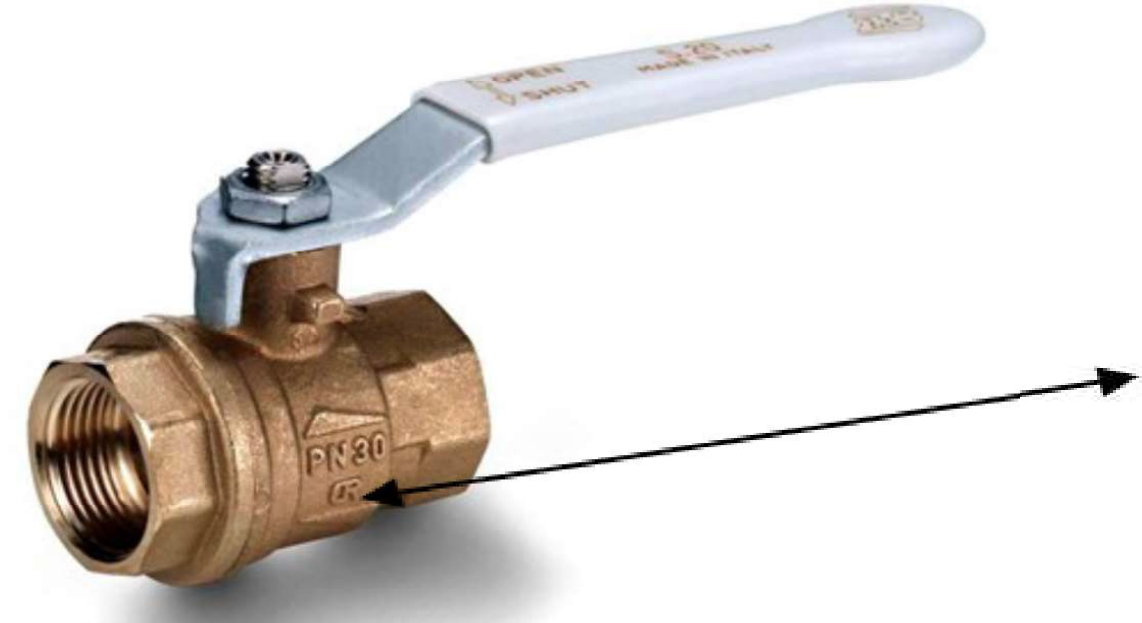
DZR ball valve with CR “corrosion” resistant marking.
Seacock valves should be inspected annually for corrosion, and exercised periodically to ensure their correct operation. Further, their ball valves should be greased once a year.
Additional options of DZR or bronze sea cocks.
One of the preferred choices for many boaters is to install plastic (Marelon made by Forespar) seacocks and fittings. Marelon is not exactly plastic; it is a glass-reinforced nylon that does not corrode, is flexible, and requires no bonding and minimal maintenance.
The 93 series Marelon seacocks thru-hull valves meet all the ABYC standards and are ISO certified. Nonetheless, one must be very precautious where to install Marelon fittings, since it is not a good idea to use them in engine spaces or other areas exposed to risk of fire due to lack of resistance to it.
Case
A few months ago, I was called to survey a Beneteau 26’. While inspecting the seacocks (marine quality bronze) I noted that even when they looked to have some signs of corrosion, the seacock handles were opening and closing smoothly. Apparently, they were fine with the exception that they were a bit corroded. Therefore, in my report I recommended to pay close attention to them and, with any signs of strange leaks, corrosion, or anything else, they should be replaced immediately. The Beneteau’s owner did not want to spend more money by replacing them right away and made a decision to wait a few more months.
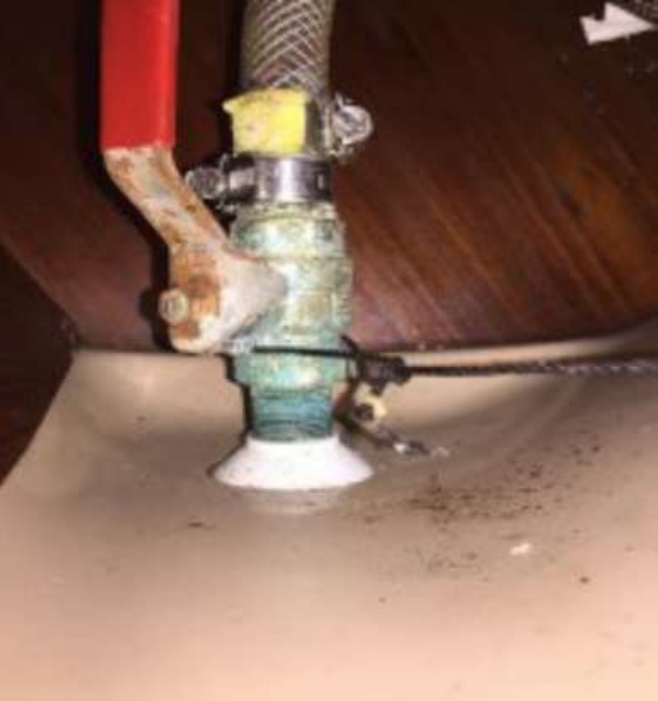
Seacock at the moment of the inspection (Beneteau 26.5).
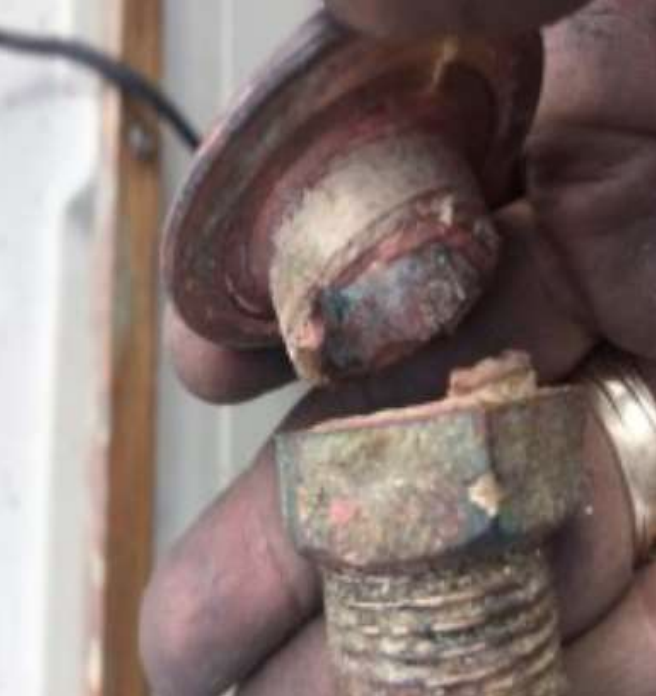
Seacock after being pulled out 3 months later (Beneteau 26.5).
Three months later, the owner hauled out the boat to do a bottom job and he decided to replace the seacocks. When he pulled them out, they broke apart. The only seacock that we managed to take out in one piece had the ball valve broken inside. The moral here is that even with a small “warning sign” of something wrong in the seacocks, they should be replaced right away. Just because the valve handle can be manipulated does not imply that the ball valve inside is working properly. Furthermore, this could save thousands of dollars to a boat owner.
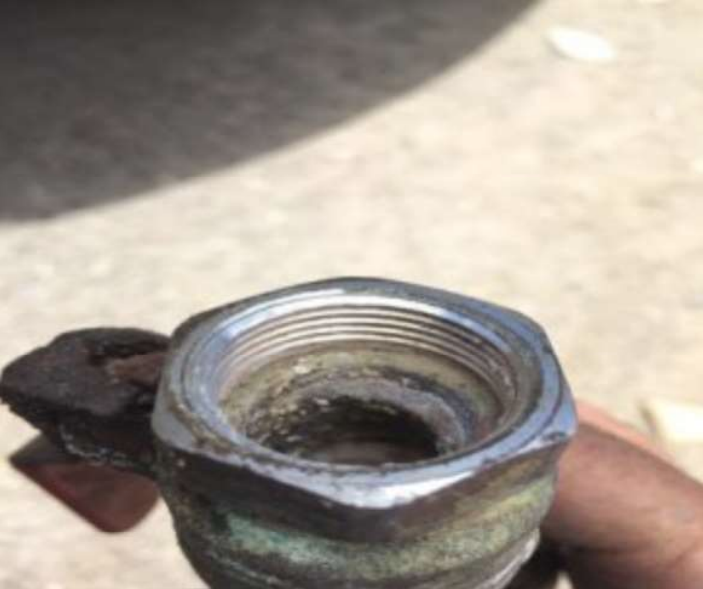
Broken ball valve inside (Beneteau 26.5).
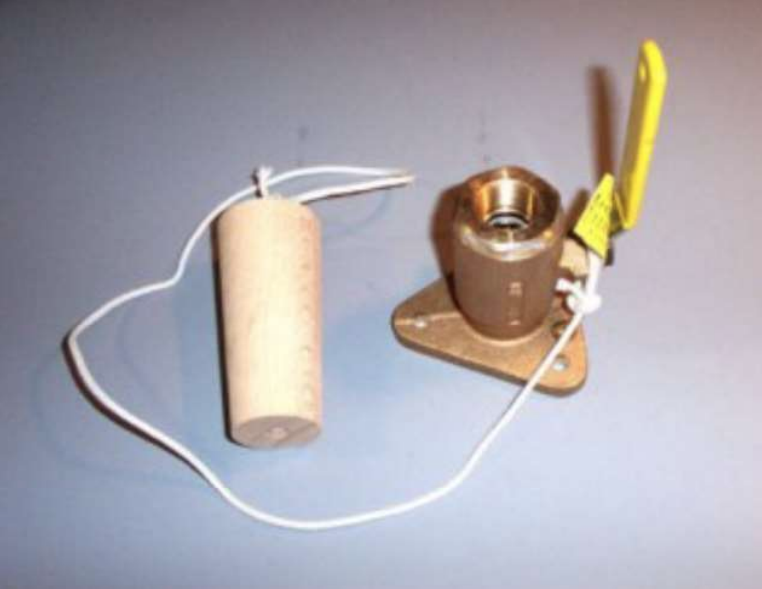
Be prepared for emergencies
Always bear in mind the importance of having plugs properly attached to each one of the fittings and also an available hammer.